 PARIS EN MOBYLETTE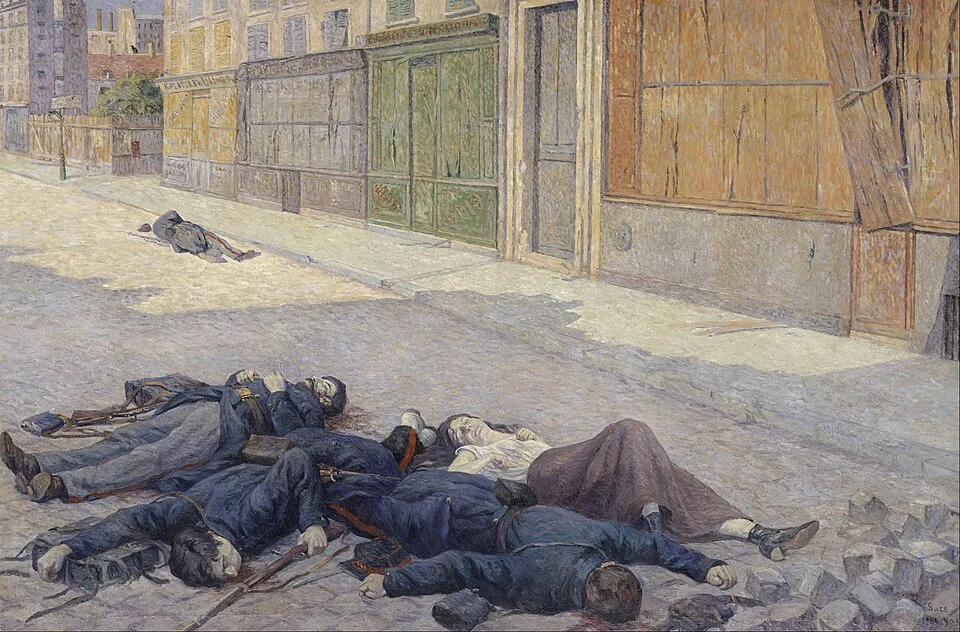
The Dark Heart Of Paris: A Chronicle Of 10 Bloody Events That Shaped History
Paris seduces millions of visitors annually with its romantic boulevards, world-class museums, and iconic monuments. Yet beneath the City of Light’s glittering surface lies a darker chapter—one few tourists ever contemplate while sipping coffee at a Parisian café. The dark history of Paris is not merely a footnote in European history; it represents pivotal, often brutal moments that forged modern France. For the discerning traveler seeking authenticity beyond the postcard, understanding these ten bloody events transforms Paris into something far more profound: a living classroom of human experience, both triumphant and tragic.
This comprehensive exploration of Paris’s violent past will challenge your perception of this enchanting city. Whether you’re planning a historical walking tour or deepening your cultural knowledge before arrival, these ten watershed moments reveal how tragedy, persecution, and conflict have repeatedly tested Parisian society—and paradoxically, shaped its resilience.
And if you’d like to visit Paris, accompanied by a historian, while riding a vintage French moped, follow the link below.
1. THE MEDIEVAL SCAPEGOATS: POGROMS AGAINST PARIS’S JEWISH COMMUNITY (1347–1352)
When Plague Met Prejudice
When the Black Death swept across medieval Europe in 1347, Paris became an epicenter of both epidemiological catastrophe and religious violence. As thousands died from the mysterious plague, Parisian authorities and mobs, desperate for explanations, found their culprits: the city’s Jewish community.
In a chilling reversal of logic, Jewish residents were accused of poisoning wells to spread the plague—a lie that would echo through centuries of antisemitic persecution. Between 1347 and 1352, hundreds of Parisian Jews were killed in organized pogroms, their homes plundered, their communities destroyed. The accusation was scientifically absurd: the plague ravaged Jewish populations at identical rates as Christian populations. Yet reason proved powerless against fear.
The Historical Irony
Remarkably, Pope Clement VI issued papal bulls in 1348 defending Jews and urging church leaders to provide sanctuary. His personal physician, Guy de Chauliac, even published medical arguments proving the accusations false. Yet local authorities in Paris and beyond ignored Rome’s appeals. The pogroms persisted until the plague itself waned by 1351, taking with it any lingering interest in targeting the Jewish community.
This dark chapter of Paris’s history illustrates how catastrophe weaponizes prejudice—a pattern that would repeat itself in later centuries.
2. THE BUTCHERS’ REVENGE: THE MASSACRE OF 1418
Civil War Descends into Bloodshed
The early 15th century found Paris torn by the ferocious Armagnac-Burgundy civil war. When the Burgundian faction seized control of the capital in May 1418, their revenge was swift and merciless. Bernard VII d’Armagnac, the powerful military commander of the rival faction, became their primary target.
On June 12, 1418, a mob of Parisian butchers and Burgundian soldiers attacked the Conciergerie prison where Armagnac was held. The scene that followed was savage: Armagnac was beaten, stripped naked, and dragged through the streets for three days before being dumped near a garbage heap in a final act of dehumanization. Beyond Armagnac’s death, thousands of Armagnac supporters were hunted through Paris’s streets, arrested, and murdered—the exact toll remains disputed by historians, but estimates suggest 3,000 to 5,000 deaths.
Why This Matters Today
Visiting Paris’s Conciergerie today, few tourists realize this fortress-prison was once the site of one of medieval Europe’s most brutal political purges. The massacre of 1418 fundamentally altered French politics, ensuring Burgundian dominance and reshaping the trajectory of the Hundred Years’ War.
3. THREE DAYS THAT STUNNED CHRISTENDOM: THE ST. BARTHOLOMEW’S DAY MASSACRE (1572)
Religious Conflict Turns Genocidal
If Paris’s dark history contains a single event that epitomizes the horror of religious extremism, it is the St. Bartholomew’s Day Massacre on August 24, 1572. The massacre began as a targeted assassination—King Charles IX, pressured by the ultra-Catholic Guise family, ordered the killing of Admiral Gaspard de Coligny, the military leader of French Protestants.
The assassination triggered something far worse. On the night of August 23–24, Catholic mobs began systematically hunting Protestants (Huguenots) through Paris. For three consecutive days, the violence spiraled into genocidal rampage. Estimates suggest 7,000 to 10,000 Protestants were slaughtered in Paris alone, with contemporary witnesses describing streets “red with blood” and victims “killed like sheep at slaughter”.
The Continental Contagion
Horrifyingly, the massacre didn’t stop in Paris. As news spread, similar “St. Bartholomew’s” killings erupted in at least twenty provincial cities. Modern historians estimate the total death toll across France reached 10,000 to 15,000 people. Pope Gregory XIII, apparently unbothered by the slaughter of Christians, celebrated with special thanksgiving masses—a response that remains one of history’s most damning commentaries on institutional religious extremism.
For History Enthusiasts
The place de la Concorde, where so many later victims would meet their end on the guillotine, became a pilgrimage site for survivors seeking to commemorate fallen relatives. Modern dark history tours often begin at Pont Saint-Michel, where some bodies were thrown into the Seine.
4. WHEN MAGISTRATES BECAME REVOLUTIONARIES: THE FRONDE (1648–1653)
An Uprising Against Absolute Power
The dark history of Paris during the mid-17th century took a different form: civil disorder rooted not in religious conflict but in political power. The Fronde (meaning “sling” or “catapult” in French—a weapon used by street children) was Paris’s only significant uprising against royal authority before the French Revolution.
In 1648, financial hardship and the arbitrary removal of judges’ guaranteed positions sparked a rebellion led by magistrates of the Paris Parlement (the kingdom’s highest court). What began as a legal dispute escalated into urban warfare. By August 1648, barricades covered Paris’s streets. Magistrates were assassinated, government officials hunted, and the city descended into chaos that lasted until 1653.
The Human Cost
While specific death tolls remain imprecise—estimates range from hundreds to thousands—the social disruption was immense. Entire neighborhoods became battlegrounds. The royal family itself was forced to flee, with young King Louis XIV witnessing the fragility of absolute power firsthand. This experience haunted him throughout his reign and motivated his later decision to move the court to Versailles, away from turbulent Paris.
Why This Still Resonates
The Fronde challenged a fundamental question: could the common people and magistracy challenge a king’s authority? The answer was yes—a lesson not lost on revolutionaries 140 years later.
5. THE TERROR: WHEN REVOLUTION DEVOURED ITS CHILDREN (1793–1794)
The Apex of Revolutionary Violence
Few episodes in European history equal the sheer horror of La Terreur (The Reign of Terror). Between September 1793 and July 1794, Paris became a city of fear, suspicion, and mass execution.
Under the Committee of Public Safety, led by Maximilien de Robespierre, an estimated 16,594 death sentences were carried out across France, with 2,639 occurring in Paris alone. The guillotine, that supposedly humane execution device, became the symbol of revolutionary fanaticism. On the place de la Concorde, the blade fell so frequently that Parisians joked about the “Razor of the National Razor.”
The Scale of Atrocity
Contrary to popular belief, aristocrats were not the primary victims—they represented less than 10% of the dead. Instead, ordinary Parisians were arrested on suspicion of “counter-revolutionary sentiment,” a charge with no fixed definition. Priests who wouldn’t swear allegiance to the state were executed. Political opponents of Robespierre vanished. Common workers accused of hoarding food met the guillotine. By June and July 1794, executions peaked at truly genocidal rates.
The Macabre Details
Marie-Antoinette’s execution on October 16, 1793, symbolized revolutionary triumph—yet her death was marked not by celebration but by eerie silence as thousands witnessed the former queen’s severed head displayed. The revolutionary government was executing its own leaders. Robespierre himself, after orchestrating thousands of deaths, was guillotined on July 28, 1794.
A Modern Perspective
Walking through Paris today, most visitors pass the place de la Concorde without grasping the horror that unfolded there. Approximately 1,300 executions occurred in that square alone. Memorial plaques and guided historical tours now help tourists understand this darkest chapter of Paris’s democratic experiment.
6. THE PRESIDENT’S POWER GRAB: LOUIS-NAPOLÉON’S COUP D’ÉTAT (DECEMBER 2, 1851)
Democracy Crushed by Military Force
The dark history of Paris continued into the modern era with Louis-Napoléon Bonaparte’s coup d’état on December 2, 1851. The president, facing imminent constitutional limits on his power, orchestrated a lightning strike that would reshape France.
In the night of December 1–2, 60,000 troops occupied every strategic point in Paris. Printing presses were seized, cafés closed, and stable yards padlocked to prevent residents from obtaining horses to flee the city. The strategy was methodically totalitarian: eliminate opposition leaders’ ability to organize or escape. Over 27,000 people were arrested in the following days.
The Casualties of Repression
Street resistance erupted on December 3–4, when Parisians attempted to build barricades in working-class eastern districts. Government troops responded with overwhelming force. Estimates of deaths range from 400 to 1,000, with some historians placing the figure higher. Soldiers fired on crowds with artillery, and bodies accumulated in Paris’s streets.
The Lasting Impact
What makes this event crucial to Paris’s dark history is its demonstration that even constitutional systems could be dismantled through military occupation. The coup’s success emboldened authoritarian movements across Europe. Yet it also galvanized republican resistance—many of those arrested would become the founding generation of the Third Republic, France’s longest-lasting democratic system.
7. CHOLERA, CONSPIRACY, AND BLOODSHED: THE JUNE REBELLION (JUNE 5–6, 1832)
When Plague and Politics Collided
The year 1832 brought tragedy upon Paris in the form of a cholera epidemic that killed 18,402 people. In the poorest neighborhoods, mortality rates approached apocalyptic levels. Desperate and suspicious, Parisians seized on a dangerous rumor: the government had poisoned wells to reduce the population.
This paranoia erupted into violence following the funeral of Jean Maximilien Lamarque, a beloved military general and monarchy critic who had fallen victim to cholera. His funeral procession of 100,000 mourners transformed into a political demonstration. When a scarlet flag reading “Liberty or Death” was raised, shots rang out.
The Barricades of Saint-Merri
Over the next two days, republicans constructed barricades around the city, particularly in the Latin Quarter near the church of Cloître Saint-Merri. Government forces, numbering 60,000 troops, surrounded the rebels. The resulting clash claimed approximately 800 lives, with 93 insurgents and 73 soldiers killed.
Historical Resonance
The June Rebellion would later inspire Victor Hugo’s masterpiece “Les Misérables,” immortalizing the idealism and tragedy of those who died fighting for political change. For modern tourists exploring Paris, the narrow streets of the Fifth Arrondissement still echo with this history.
8. PARIS BURNING: THE SEMAINE SANGLANTE (BLOODY WEEK) OF 1871
The Commune’s Fiery Collapse
The dark history of Paris reaches one of its most visually apocalyptic moments during the Semaine Sanglante (Bloody Week) of May 21–28, 1871. The Paris Commune, a short-lived radical government established in the chaos following the Franco-Prussian War, had attempted to create a workers’ paradise. The French national government had other ideas.
When government troops entered the city on May 21, they encountered not a disorganized mob but a structured military force of Commune defenders. What followed was a week of urban warfare of breathtaking brutality. Communards set fires throughout the city—the Tuileries Palace, the Hôtel de Ville, the Palais de Justice all burned.
The Human Toll
Between 10,000 and 20,000 Communards were killed—some in combat, many summarily executed after capture. Soldiers showed little mercy, as their officers viewed the Commune not as a political movement but as a revolutionary threat to civilization itself. The massacres continued even after organized resistance collapsed.
A Macabre Detail
In their final acts of defiance, Commune leaders executed roughly 100 hostages, including Georges Darboy, the Archbishop of Paris. This gave government forces justification for intensified reprisals—though the disproportionality of the response (10,000 Communards killed versus 100 hostages executed) reveals the government’s intent to exterminate the movement entirely, not simply restore order.
For Visitors
Many Paris neighborhoods still bear the scars of the Bloody Week. The walls and buildings of the eleventh arrondissement, where the Commune’s last barricades stood, contain embedded bullets from 1871. Several guided historical tours now focus specifically on this episode.
9. SUMMER OF HORROR: THE VEL’ D’HIV ROUNDUP (JULY 16–17, 1942)
The Largest Arrest of Jews in Western Europe
The dark history of Paris reaches its most devastating chapter during World War II with the Vel’ d’Hiv roundup—the largest mass arrest of Jews in Western Europe. On July 16–17, 1942, French police, acting under the Vichy regime and Nazi occupation, conducted raids across Paris and suburbs.
In a meticulously planned operation, approximately 13,152 Jews—including 4,115 children—were arrested. Families were torn apart in dawn raids. Many were barely given time to dress before being herded into buses and trucks.
The Vélodrome d’Hiver: Hell on Earth
The primary detention point was the Vélodrome d’Hiver (Winter Velodrome), a sports arena in the 15th arrondissement. Nearly 8,000 people were crammed into this building with almost no provisions—no food, no water, no sanitation facilities. Children separated from parents were housed in different sections, a cruelty designed to facilitate later deportations.
After five days in these nightmarish conditions, detainees were transported in cattle cars to camps in the Loire Valley, then onward to Auschwitz. Of the 13,152 arrested, fewer than 100 adults survived the war.
The Buried History
For decades, France maintained an official conspiracy of silence around the Vel’ d’Hiv. The government, ashamed of French collaboration, downplayed the round-up’s significance. It wasn’t until 1995 that President Jacques Chirac formally acknowledged France’s responsibility. In 2017, the Mémorial de la Shoah (Holocaust Memorial) opened on the site of the old velodrome, finally giving voice to the victims.
Why This Matters to Tourists
The Vel’ d’Hiv story fundamentally challenges the myth of France as a beacon of freedom. It reveals how institutions, individuals, and an entire society can become complicit in genocide. Educational historical tours now include this site as essential context for understanding both Paris and the Holocaust.
10. SILENCED BY THE STATE: THE OCTOBER 17, 1961 MASSACRE
The Colonial Chickens Come Home
The final and most recently acknowledged episode in Paris’s dark history occurred on October 17, 1961—a massacre so systematically covered up that it remained official history’s forgotten crime for nearly four decades.
As the Algerian War of Independence neared conclusion, Paris’s Algerian population—numbering in the hundreds of thousands—faced systematic discrimination. On October 5, 1961, Police Prefect Maurice Papon announced a discriminatory curfew: all Algerians were forbidden from leaving their homes between 8:00 PM and 5:30 AM.
The Peaceful Protest and Brutal Response
In response, the National Liberation Front (FLN) organized a peaceful march for October 17. Between 20,000 and 40,000 Algerians, many families with children, peacefully demonstrated in Paris’s streets. They carried no weapons; demonstrators were searched before boarding buses and metro cars.
The police response was immediate and savage. Nearly 2,000 officers, supported by riot police and auxiliary forces, systematically attacked the demonstrators. Police fired weapons into crowds. Protesters were beaten with cudgels. Most horrifically, dozens were thrown into the Seine River, where they drowned.
The Cover-Up
The official death toll announced by authorities: three. Historians now concur that at least 100 people were killed on the night of October 17 alone, with total casualties ranging from 200 to 300. Bodies washed up on the Seine’s banks for weeks afterward.
Over 12,000 Algerians were arrested. Many were transported to detention camps and later deported to Algeria. The brutality extended beyond the streets into detention centers, where police continued beating arrested demonstrators.
The Belated Acknowledgment
For 37 years, France officially denied the massacre’s severity. It wasn’t until 1998 that authorities finally acknowledged deaths beyond the fabricated figure of three. President Jacques Chirac placed a memorial plaque on Pont Saint-Michel in 2001. Only in 2021 did President Emmanuel Macron call the massacre “inexcusable”.
BEYOND THE DARKNESS: WHY UNDERSTANDING PARIS’S BRUTAL PAST ENRICHES THE PRESENT
The dark history of Paris is not peripheral to understanding this magnificent city—it is central to it. From medieval pogroms to colonial massacres, from religious warfare to revolutionary terror, Paris has repeatedly witnessed humanity at its worst.
The city’s beauty is not diminished by this knowledge—if anything, it deepens. Paris rebuilt itself countless times from ruins. It created unprecedented art and philosophy from suffering. It eventually faced its own darkness with partial honesty.
That resilience, forged through violence and acknowledged through memorial, makes Paris not merely a beautiful destination but a profound one.
And if you’d like to visit Paris, accompanied by a historian, while riding a vintage French moped, follow the link below.